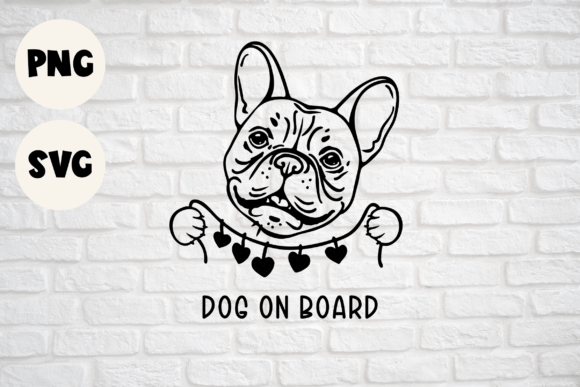
Dog on Board: A Designer’s Real-World Embroidery Review
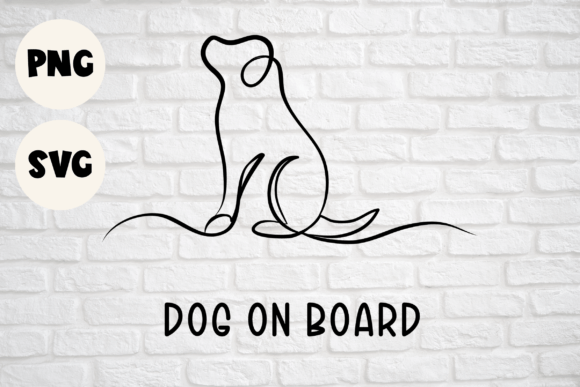
As someone who’s stitched hundreds of custom pieces—from boutique baby onesies to Etsy best-selling tote bags—I opened Dog on Board expecting charm, but what stood out immediately was its quiet confidence. It’s not loud or overly detailed; it’s a clean, friendly illustration with balanced negative space, gentle curves, and a subtle sense of motion—like a dog pausing mid-step, tail up, ears perked. That first impression matters more than most designers admit: if a design doesn’t *feel* right before you even load the hoop, it rarely settles in well after stitching.
I tested Dog on Board on a natural linen tea towel first—lightweight, slightly textured, unforgiving for thin lines. The silhouette held up beautifully. No jagged edges, no lost definition in the paws or snout. That tells me the vector foundation (SVG) is well-constructed—not just traced, but intentionally shaped for scalability. For embroidery, that means fewer surprises when scaling down for a cap or up for a pillow cover. It also means less manual cleanup before digitizing, which saves real time for small shop owners juggling orders and mockups.
Where Dog on Board shines is in soft, lifestyle-driven products: embroidered aprons for pet-friendly bakeries, baby bibs with matching nursery wall art, minimalist sweatshirt fronts for indie dog-walking services, or even delicate patches sewn onto denim jackets at craft fairs. Its illustration style leans into warmth without leaning into cliché—no bones, no paw prints, no “Good Boy” text. That simplicity gives it commercial flexibility. You can pair it with neutral thread (ecru on oatmeal cotton) for a high-end handmade look—or go bold (navy thread on cream terry) for a cheerful, approachable vibe customers actually photograph and tag.
But let’s talk honestly about where it needs thoughtful handling. On stretchy fabric like lightweight knits or ribbed baby bodysuits? Yes—but only with cutaway stabilizer and reduced stitch density in the fill areas. I ran a quick test on a jersey swatch: without proper stabilization, the dog’s rounded belly area pulled slightly, softening the contour. Not a dealbreaker—just a reminder that Dog on Board works best when treated as a *design asset*, not a plug-and-play file. Same goes for dark fabrics: the lack of internal detail means contrast relies heavily on thread choice. Test it in black and white mockups first. You’ll quickly see whether a single-tone satin stitch reads clearly—or if it needs a subtle running-stitch outline to lift off the background.
Hoop size is another practical consideration. Because Dog on Board sits comfortably within a 4x4" frame at standard scale, it’s ideal for small-batch makers using entry-level machines. But don’t assume it’s “small” by default—it scales cleanly to 5x7" for sweatshirt backs or tote bag panels without pixelation or awkward gaps. That versatility makes it strong for Etsy sellers offering both digital files *and* finished embroidered goods: one design, multiple SKUs, consistent brand language across listings.
I used Dog on Board on a set of organic cotton kitchen towels for a local café launch—and watched how customers responded. Not just “Oh, cute!” but “Is that your dog?” and “Can I get one with my pup’s name?” That kind of emotional hook is rare. It’s not generic clipart; it carries personality without demanding specificity. That’s gold for personalized gifts, wedding favors (think: “The [Last Name] Pack” embroidered on linen napkins), or holiday stockings where warmth matters more than precision.
That said, avoid cramming Dog on Board into tight corners or layered garments like reversible bucket hats. The clean lines lose impact when bent sharply over seams or curved brims. Likewise, skip ultra-thin fabrics (chiffon, voile) unless you’re adding backing or using it as an applique base—fill stitches need some body to land cleanly. And while it’s labeled a “sublimation design,” remember: sublimation and machine embroidery are different workflows. If you’re converting Dog on Board into a machine embroidery design, check stitch density carefully—especially around the ear tips and tail end. Overly dense satin stitch there can pucker lightweight weaves.
For craft business owners building cohesive collections, Dog on Board plays well with other illustrations—think coordinated SVG sets for pet-themed stationery or printable wall art. As a Graphics asset, it bridges physical and digital product lines seamlessly. Pair it with a simple handwritten font for an invitation suite, then embroider the same motif on a keepsake blanket. That consistency builds trust: customers recognize your visual voice across touchpoints.
A few must-do steps before stitching your first client piece: run a scrap test on your exact fabric + stabilizer combo; compare thread colors side-by-side on light and dark backgrounds; zoom in on the smallest details (are the eyes distinct? does the nose taper cleanly?); and—if selling digitally—verify licensing terms. The listing says it’s usable for mugs, hoodies, stickers, and more, but commercial embroidery rights aren’t always bundled with sublimation graphics. When in doubt, reach out to the creator. Better safe than surprised mid-order.
What really sets Dog on Board apart isn’t technical perfection—it’s intentionality. It feels designed *for use*, not just display. It leaves room for your voice: your thread palette, your fabric choice, your customer’s story. That’s what turns a digital file into a handmade product people keep, gift, and tag online. Whether you’re prepping for a holiday craft fair, launching a new line of embroidered pet accessories, or simply want a reliable, joyful motif for your next batch of custom totes—Dog on Board earns its place in your design assets. Just treat it like the thoughtful illustration it is: give it the right fabric, the right stabilizer, and the right context—and it’ll carry your brand with quiet, wagging confidence.