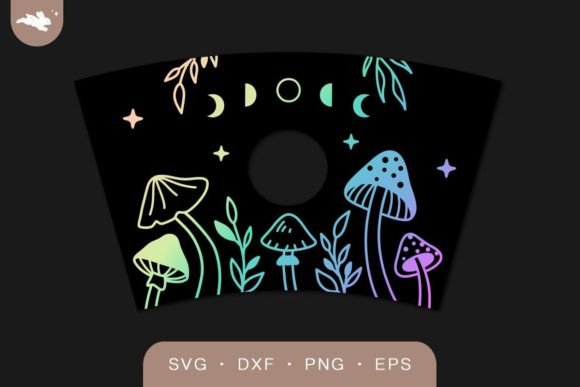
Magic Mushrooms Cup: A Designer’s Real-World Embroidery Review
Let’s be honest—when I first opened the Magic Mushrooms Cup embroidery file, I didn’t expect it to land so cleanly in my current project queue: a set of custom embroidered kitchen towels for a local café’s holiday gift bundle. But there it was—playful, grounded, and quietly sophisticated. Not cartoonish, not overly literal, but unmistakably mushroom-themed with a gentle whimsy that reads as intentional, not trendy. That’s rare in digital embroidery files labeled “magic” or “psychedelic.” This one feels like it belongs on real handmade products—not just as a novelty, but as part of a cohesive, thoughtful collection.
First Impressions: Mood, Shape, and Stitch-Ready Personality
The Magic Mushrooms Cup design leans into organic flow rather than rigid symmetry. It’s built around a central cup shape (think wide-mouthed ceramic or vintage enamel), wrapped with three stylized mushrooms—cap shapes vary slightly, stems taper naturally, and subtle gills are implied through fine satin stitch lines rather than dense fill. There’s no text, no extra flourishes, no unnecessary gradients or shadows. That simplicity is its biggest strength for embroidery. It translates well to thread without demanding unrealistic detail or micro-stitching.
I immediately pictured it stitched on linen tea towels, baby onesies, and unstructured cotton tote bags—places where charm matters more than precision, and where the design’s soft edges won’t fight the fabric’s texture. It doesn’t scream “party”—it whispers “cozy ritual,” which makes it unexpectedly versatile for boutique branding, nursery decor, or even wedding favors (think embroidered napkins for a forest-themed brunch).
Where Magic Mushrooms Cup Shines in Real Projects
- Custom apparel: On midweight sweatshirts and crewneck tees, the design holds its shape beautifully at 3.5–4 inches wide. The negative space between mushrooms lets the fabric breathe—no puckering or stiffness.
- Tote bag design: Centered on the front panel of a 15″ canvas tote? Perfect. The cup base anchors the composition, and the upward curve of the stems guides the eye naturally.
- Baby embroidery: Stitched on organic cotton receiving blankets or bibs (with proper stabilizer), it reads as gentle and earthy—not too busy, not too bold. Parents appreciate subtlety.
- Embroidered patch: Clean outer edge + moderate stitch density = excellent patch viability. Works equally well as sew-on or iron-on (with backing).
- Holiday embroidery: Paired with cinnamon-stick motifs or minimalist pine sprigs, it fits seamlessly into winter gift sets—especially for plant lovers or slow-living brands.
Where to Proceed With Care
This isn’t a one-size-fits-all embroidery file—and that’s okay. Here’s where I’d pause before stitching:
- Small hoop sizes (under 4″): The cup base needs breathing room. Below 3.75″, the stem details start to compress, losing their expressive taper.
- Textured fabrics (like bouclé or heavy terry): The fine satin stitch on gills may blur. Test on scrap first—or simplify those elements manually if needed.
- Stretchy fabric (knits, jersey): Requires cutaway stabilizer + basting stitches. The curved cup outline can distort without proper support.
- Dark fabric: Light thread colors (cream, pale sage) read clearly—but avoid pastel pinks or yellows unless you’re confident in your machine’s tension calibration.
- Curved surfaces (caps, hats): The design’s width-to-height ratio works better on flat or gently rounded areas. Avoid placing it across the crown seam.
What It Adds (and Doesn’t Add) to Your Finished Product
A well-executed Magic Mushrooms Cup elevates perceived value—not because it’s flashy, but because it signals intentionality. Customers notice when a design feels *designed*, not just downloaded. On an Etsy listing for embroidered aprons, it tells shoppers this isn’t mass-produced; it’s curated. On a small shop’s holiday card mockup, it adds warmth without clutter. And crucially—it doesn’t overwhelm the product. It complements, rather than competes with, the item’s function and texture.
That said, it won’t carry a whole brand alone. It’s a strong supporting player—not a logo replacement. Use it as a secondary motif alongside clean typography or monogramming. As a standalone piece on a pillow cover? Lovely. As the only design on a full-sleeve sweatshirt? Too quiet. Know its role.
Practical Notes Every Embroidery Designer Should Check
- Test on scrap fabric first—especially if using textured or dark materials.
- Review stitch density in your embroidery software. If fill areas feel overly dense for your fabric weight, reduce density by 5–8%.
- Confirm hoop size compatibility before digitizing or resizing. Don’t assume it fits a 4×4 hoop without checking actual dimensions.
- Inspect small details like gill lines and cap highlights—they’re delicate but critical to the design’s personality.
- Test black-and-white mockups to gauge contrast and legibility across backgrounds.
- Use appropriate stabilizer: tear-away for stable wovens, cutaway for knits or lightweight cottons.
- Verify licensing before selling finished items or bundling the file with other digital embroidery files. This is a Graphics asset—not automatically cleared for commercial redistribution.
As a craft business owner who ships 200+ embroidered pieces a month, I value designs that stitch consistently, photograph well, and don’t require constant troubleshooting. Magic Mushrooms Cup delivers on all three—if you treat it like the thoughtful machine embroidery design it is, not just another SVG download. It fits neatly into the sweet spot between playful and polished—a quiet signature piece for makers who believe handmade means both beautiful and buildable.
Whether you’re prepping for a craft fair, building your Etsy seller portfolio, or designing small shop merchandise, this is the kind of embroidery file that earns repeat use—not because it’s flashy, but because it works. Thoughtfully. Quietly. Well.